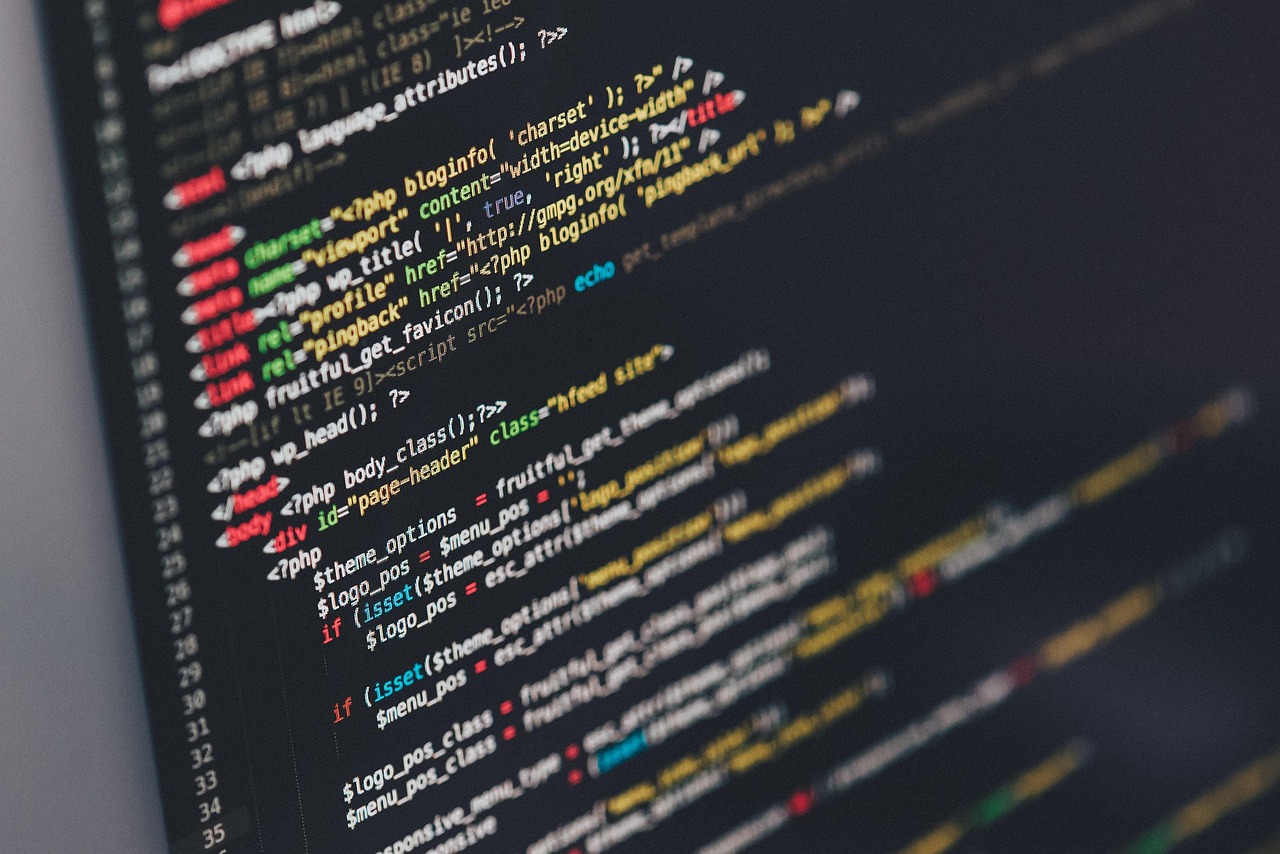
PHP is not the language people reach for when they want to sound futuristic. But when I need AI automation to move through real business systems, call APIs, survive boring failures, and be maintainable by humans, PHP still earns its place.
The Unfashionable Choice
When people talk about AI automation, PHP is rarely the first language in the room.
The fashionable stack is usually Python for model work, TypeScript for product surfaces, and a queue or workflow engine somewhere in the background. That stack makes sense. Python owns a large part of the machine learning ecosystem. TypeScript is excellent when the automation lives close to a web interface. I use those tools when they fit.
But a lot of real automation is not model research. It is not a demo with a glowing chat box. It is a chain of ordinary operational work: read this mailbox, classify this request, look up customer data, check a policy, call an API, write a record, create a task, wait for approval, retry a failed webhook, send a notification, and leave a trace that someone can audit later.
For that kind of work, PHP still feels practical to me. More specifically, modern PHP with Laravel's ecosystem gives me a boring, productive base for systems where the AI part is only one component in a larger workflow.
That is the key distinction. If I am training a model, I do not reach for PHP. If I am building a vector search experiment from scratch, Python may be easier. If I am building a small browser-first assistant, TypeScript can be the shortest path. But if I am building automation around business processes, accounts, permissions, queues, schedules, emails, webhooks, dashboards, and database-backed state, PHP is still a strong choice.
Not because it is trendy. Because it lets the non-glamorous parts of automation stay understandable.
Most AI Automation Is Backend Work
The public face of AI is the response. The hard part is everything around the response.
An automation system has to decide when it is allowed to act. It has to know which account it is operating for. It has to manage credentials, rate limits, retries, partial failures, duplicate events, and human approvals. It has to remember what happened last time. It has to explain why it made a decision. It has to degrade gracefully when an API times out or a model returns something weird.
That is backend engineering.
In that world, the language matters less than the operational shape of the system. Can I model the workflow clearly? Can I store durable state? Can I run scheduled jobs? Can I queue slow work? Can I inspect failures? Can another developer understand the code six months later? Can I deploy it without building an entire platform team around it?
PHP is good at this class of problem because it grew up around web applications that needed to interact with databases, forms, emails, files, queues, sessions, and business rules. That history is not a weakness. It means the ecosystem has spent years smoothing the exact edges that AI automation keeps running into.
AI does not remove those requirements. It adds another unpredictable dependency to them.
If anything, AI makes boring backend discipline more important. A model call can be slow, expensive, non-deterministic, or unavailable. If the surrounding system is also fragile, the whole thing becomes impossible to trust. A reliable automation platform needs boring rails around the interesting part.
Laravel Gives Automation A Shape
Laravel is not required for PHP automation, but it gives the work a shape I like.
Routes are a natural entry point for webhooks and internal APIs. Form requests and validators are good for keeping external payloads honest. Jobs and queues are a clean home for model calls, enrichment, imports, notification delivery, and retryable integrations. Scheduled commands cover recurring checks. Migrations keep state explicit. Policies and middleware help draw permission boundaries. Notifications, mail, storage, cache, and logs are already there.
That matters because automation code has a tendency to become scattered.
A small script starts by checking an inbox. Then it needs a database. Then it needs to avoid processing the same message twice. Then it needs a retry policy. Then it needs a dashboard. Then it needs an approval step. Then it needs to run every hour. Then someone asks why it acted on a specific record last Tuesday.
At that point, the script is no longer a script. It is an application.
Laravel gives that application a familiar structure before the mess arrives. A queued job is a better place for a slow model call than a controller. An Artisan command is a better place for a scheduled sync than a random cron script. A database table with clear columns is a better memory layer than a JSON file that slowly becomes sacred. A feature test around a workflow is better than hoping the automation still behaves after the next refactor.
The framework does not solve architecture by itself, but it gives me default places to put things. That reduces the number of local decisions I need to invent.
Queues Are More Important Than Prompts
Prompts get most of the attention because they are visible and easy to discuss. In production automation, queue design often matters more.
A model call should usually not sit inside the request path. It can be slow. It can fail. It can hit a rate limit. It can require a retry with different context. It may need to wait until a human approves a previous step. If the entire user experience depends on that one synchronous call, the system becomes brittle.
Laravel queues are not exotic, and that is exactly why I like them. A job can represent a unit of work with a name. It can be retried. It can fail into a known place. It can be inspected. It can be delayed. It can dispatch another job. It can use middleware for rate limiting or uniqueness. It can be tested separately from the HTTP request that created it.
That is very useful for AI workflows.
ClassifyIncomingEmail can be one job. ExtractInvoiceData can be another. RequestHumanApproval can pause the workflow. ApplyApprovedAction can run only after a decision. NotifyCustomer can be retried independently. The model call becomes a step, not the whole system.
This is also where PHP's reputation for simple request-response web apps becomes outdated. Modern PHP workers are perfectly capable of running queues, schedules, and long-lived background processes when configured properly. You still need to understand memory, timeouts, deployment, and worker restarts, but those are normal operational concerns, not reasons to avoid the language.
For many automations, the queue is the product's nervous system. PHP handles that just fine.
PHP Is Good At Glue Code
There is a quiet compliment hidden inside the phrase glue code.
Glue code is what makes separate systems cooperate. It takes an event from one place, transforms it, validates it, enriches it, routes it, stores it, and sends it somewhere else. That is not glamorous, but it is where a lot of business value appears.
AI automation is full of glue code.
The model may summarize an email, but the system still has to fetch the email, parse attachments, find the related customer, check whether the sender is trusted, map the result to internal categories, create a task, and avoid leaking private data into the wrong channel. The language around the model call needs to be good at integration.
PHP has strong HTTP clients, mature database tooling, predictable deployment options, and a huge ecosystem for business web work. Laravel adds useful wrappers around queues, events, mail, storage, notifications, and validation. Composer makes dependency management straightforward. Static analysis with tools like PHPStan or Psalm can catch a surprising amount of risk when teams use it seriously.
None of that is exciting in a conference demo. It is excellent when the job is to connect real systems without creating a maintenance nightmare.
I also like PHP's readability for this kind of code. A well-written Laravel action or job can be very direct: load the record, check the policy, prepare context, call the client, store the result, dispatch the next step. There is not much ceremony. When the business workflow is already complex, I do not want the language to add more drama.
The AI Client Should Be Replaceable
One mistake I see in AI-heavy code is letting the model provider become the architecture.
The application starts with a direct call to one API. Then provider-specific response shapes spread through controllers, jobs, views, and tests. Prompt strings live next to unrelated business logic. Retry behavior is inconsistent. The team cannot change models without editing half the system. The automation becomes tightly coupled to today's vendor interface.
I prefer to keep the AI client behind a boundary.
In PHP, that can be a small service class with a clear method: classifyMessage, extractInvoiceFields, draftReply, summarizeThread, decideNextAction. The method should accept application-level input and return application-level output. Provider details stay inside. Prompts can still be versioned and tested, but the rest of the system should not need to know whether the response came from one model or another.
This is not special to PHP, but PHP makes the pattern easy to apply in ordinary business code. Define an interface. Bind an implementation in the container. Inject it into a job or action. Fake it in tests. Log the request and response metadata. Store enough audit detail to debug later without turning every model call into a public transcript.
The point is not abstraction for its own sake. The point is that AI providers change quickly. Your business workflow should not be rebuilt every time the model landscape moves.
Where PHP Is Not My First Choice
I do not use PHP as a personality trait. There are places where it is the wrong tool.
If the core work is data science, model training, numerical computing, or direct use of ML libraries, Python is the obvious default. The ecosystem is deeper, the examples are better, and the team will probably expect it. If the automation is mostly browser-side or deeply tied to a TypeScript application, keeping the logic in TypeScript may reduce friction. If the system needs extremely high-throughput event processing, a different runtime might be a better fit.
PHP can call vector databases, embedding APIs, speech services, and model endpoints. That does not mean it should own every layer of an AI stack.
The boundary I like is simple: let specialized tools do specialized work, and let PHP own the product workflow when the workflow already belongs in a PHP/Laravel application. A Laravel app can call a Python service for a specialized pipeline. A TypeScript frontend can call a PHP backend that manages permissions and state. A queue can dispatch work to a worker written in another language when that is cleaner.
Good architecture does not require one language to win everywhere. It requires each part to have a job it can do well.
The Real Test Is Maintenance
The first version of an AI automation is usually easy to build.
The second version is where the real design appears. Someone wants a new approval rule. A prompt needs a safer output format. A webhook starts sending a new field. A model becomes more expensive. A customer asks for an audit trail. A scheduled job fails silently. A support person needs to understand why the automation did nothing.
This is where I care less about language fashion and more about maintenance habits.
Can we write tests around the workflow without calling the real model? Can we replay an event? Can we see which job failed? Can we separate a bad prompt from a bad permission check? Can we change the output schema without breaking old records? Can we explain to a non-technical person what the automation did and why it stopped?
Laravel's ordinary tooling helps here. Feature tests can cover the user-visible behavior. Queue fakes can assert that the right work was dispatched. Database factories make state easy to build. Migrations document how the memory layer evolved. Logs and failed jobs provide places to investigate. None of this removes the hard parts, but it gives them a home.
That is what I want from a production automation stack. Not novelty. A home for the boring questions that always come later.
AI Makes Explicit Boundaries More Valuable
AI outputs are probabilistic. Business systems are usually not.
That mismatch is where many automations become risky. The model can suggest, classify, extract, or draft, but the application still has to decide what is allowed. A model should not be the only thing standing between an incoming email and a financial action, a customer message, or a database mutation.
In PHP, I like making those boundaries visible in code.
The model can produce a proposed action. A policy can decide whether that action is allowed. A validator can check the shape. A confidence threshold can route uncertain cases to a human. A job can store the decision. A separate action can apply it. Each step has a name. Each step can be tested. Each step can be logged.
This is slower than letting the model do everything in one clever prompt. It is also much easier to trust.
For serious automation, I do not want a magical blob. I want a pipeline where the AI component is powerful but contained. PHP is comfortable for that because business applications have always needed boundaries around user input, permissions, and side effects. AI is just a more unpredictable form of input.
Why I Still Reach For It
I still use PHP for AI automation because a lot of the work I care about looks like product engineering, not research.
I need to build things that connect to existing systems, respect permissions, run on schedules, survive failures, and stay understandable. I need queues, commands, migrations, policies, HTTP clients, tests, logs, and dashboards. I need a language and framework that make the ordinary parts cheap enough that I can spend attention on the dangerous parts.
PHP is not perfect. Laravel can become messy when teams use convenience without discipline. Long-running workers need care. Type safety requires tooling and habits. Some AI SDKs arrive later than their Python or TypeScript versions. There are real tradeoffs.
But the tradeoff is often worth it when the automation lives inside a business application. The model may be the impressive part, but the system succeeds or fails on everything around it.
That is why I do not treat PHP as old technology in this space. I treat it as a stable backend tool that happens to be very good at the unglamorous work AI products need.
The future of AI automation will not be built only by people tuning prompts. It will be built by engineers who know how to move data safely through messy systems. For that job, PHP still has a seat at my desk.
The AI call is rarely the whole product. Most of the product is the system that decides when the call is safe, useful, reversible, and worth trusting.